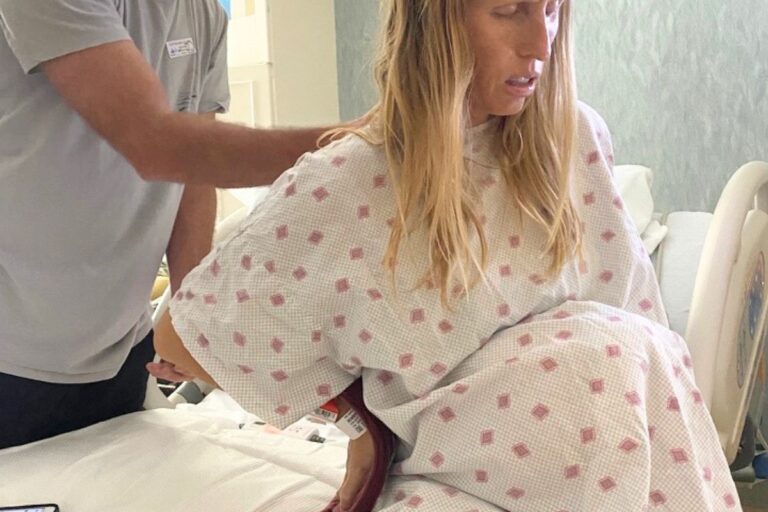
How to get baby head down
Natural Ways to Encourage Optimal Fetal Positioning

During my pregnancies, I was a little underwhelmed with the amount of information I was provided at my prenatal appointments. I felt like, for the most part, I showed up, had my vitals and weight assessed, and received information about certain tests and measures expected to be needed throughout my pregnancy. But isn’t there so much more?
Unfortunately, even when I asked, there was no mention of any exercise, movements, or intentional habits I could do to prepare for labor. As a women’s health physical therapist, I was slightly appalled at this. I mean, birth is one of the most intense experiences a woman may ever go through, and there was nothing specific I should do to prepare besides refraining from eating certain foods and practicing a few breathing strategies?
Knowing what I know about the pelvis and the muscles and ligaments that attach there and affect alignment, I knew the importance of proper preparation for birth. I knew that maintaining flexibility and good posture would affect the openness of my pelvis, which is what allows a baby to turn into the best position for birth.
As I was preparing for a vaginal birth after cesarean (VBAC). I wanted to give my body the best chance of having a natural vaginal birth, so I became very intentional with my daily movements and postures throughout my pregnancies. And, it could be a coincidence, but my babies were both head-down by 33 weeks of gestation.
Will my baby naturally turn head down?
Most babies do turn head down on their own—often between 32–36 weeks, and sometimes even later. What you can do in the meantime isn’t force a flip, but create the kind of space that makes it easier for your baby to find their way there.
How do specific movements and stretches help your baby turn head down?
Creating openness in the pelvis can help Baby move into the optimal position for birth. Babies will typically move into the optimal birthing position once we make space for them to do so.
A Little Bit about the uterus
Your uterus is supported by ligaments (like the round ligaments and uterosacral ligaments) and surrounded by muscles (your core, hips, and pelvic floor).
When there’s tightness or imbalance, it can:
- Slightly shift the shape of the uterus
- Limit how freely baby can move
- Create asymmetry in the pelvis
When you introduce movement + alignment + relaxation, you:
- Improve pelvic symmetry
- Reduce soft tissue tension
- Allow gravity to guide baby downward
This is the foundation behind approaches like “optimal fetal positioning” and body-balancing techniques used in prenatal care.
Your uterus is influenced by:
- Your posture.
- The balance of your muscles and ligaments.
- Tension in your pelvis.
- Even your breathing patterns.
So when we talk about “getting Baby head down,” what we’re really doing is:
Reducing restrictions and increasing space so the baby can rotate naturally.
Use the following exercises and movements throughout your pregnancy to optimize Baby position and prepare for the best birth.
Ten Movements You Can Do Throughout Pregnancy to Optimize Baby’s Position:
While it’s impossible to predict exactly how or when Baby will choose their birth position, there are many gentle, supportive ways you can encourage optimal positioning throughout pregnancy. Babies are wonderfully responsive to changes in space, movement, and balance within the womb, and small, consistent efforts can make a meaningful difference. If you’re like me, you want to know you’ve done what you can to support your body and your baby for birth.
1. Psoas Release
The psoas muscle originates on the lower aspect of the spine and inserts onto a bony prominence on the thigh, running in front of the pelvis. It is common for this muscle to become tight and shortened, which can affect Baby’s ability to settle lower into the pelvis.
How to do a psoas release:
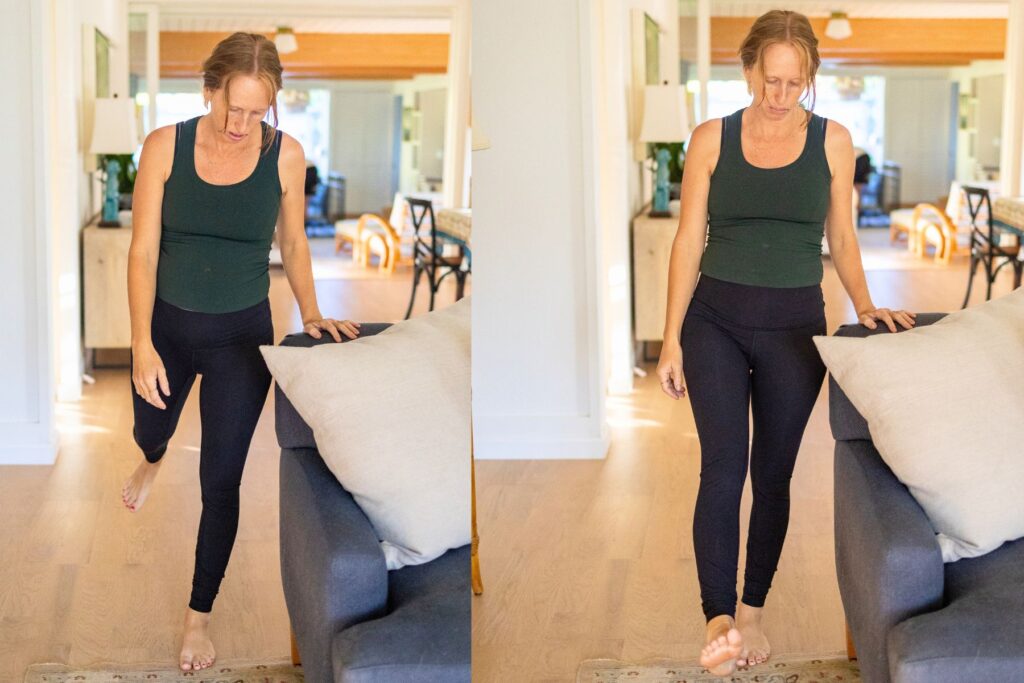
- Active release: stand on a yoga block or thick book while holding onto the back of a chair or the side of a wall. Gently swing your leg back and forth in a mid-range, like a pendulum. Do this for 1 minute and then repeat on the other leg.
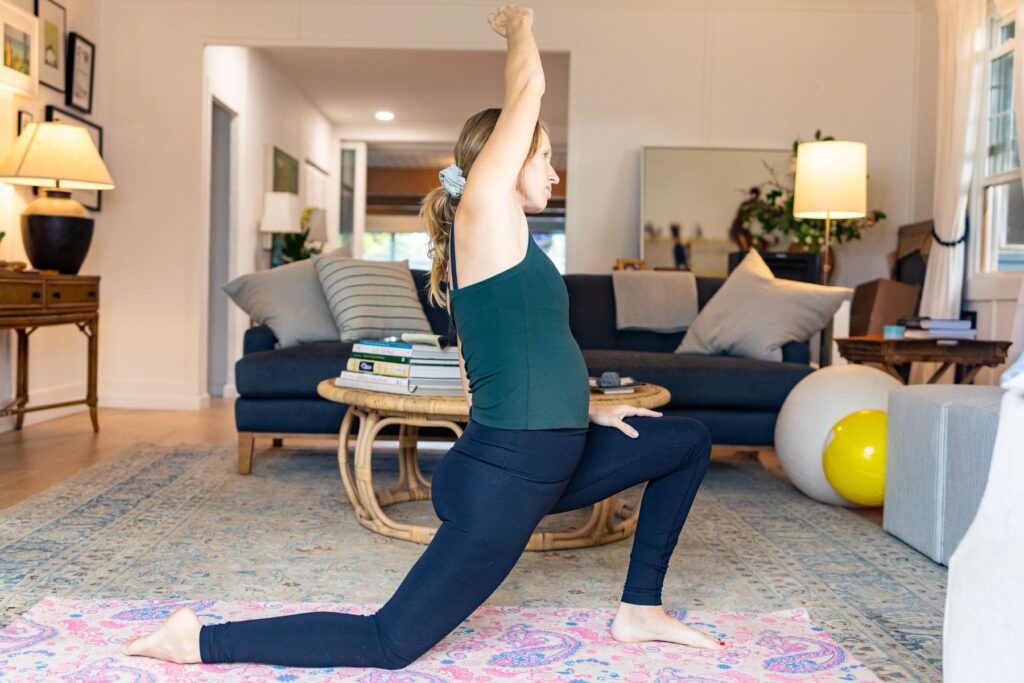
- Psoas stretching: kneeling lunge with lateral stretch.
An interesting side note about the psoas muscle: Several studies have found connections between our psoas muscle and our emotions. When our body feels stressed, and our sympathetic nervous system is activated, our psoas tightens and shortens. As mentioned above, this myofascial restriction can hinder Baby’s ability to move lower into the pelvis. This is yet another reminder that learning to relax, both mentally and physically, can play a key role in creating an optimal birthing experience.
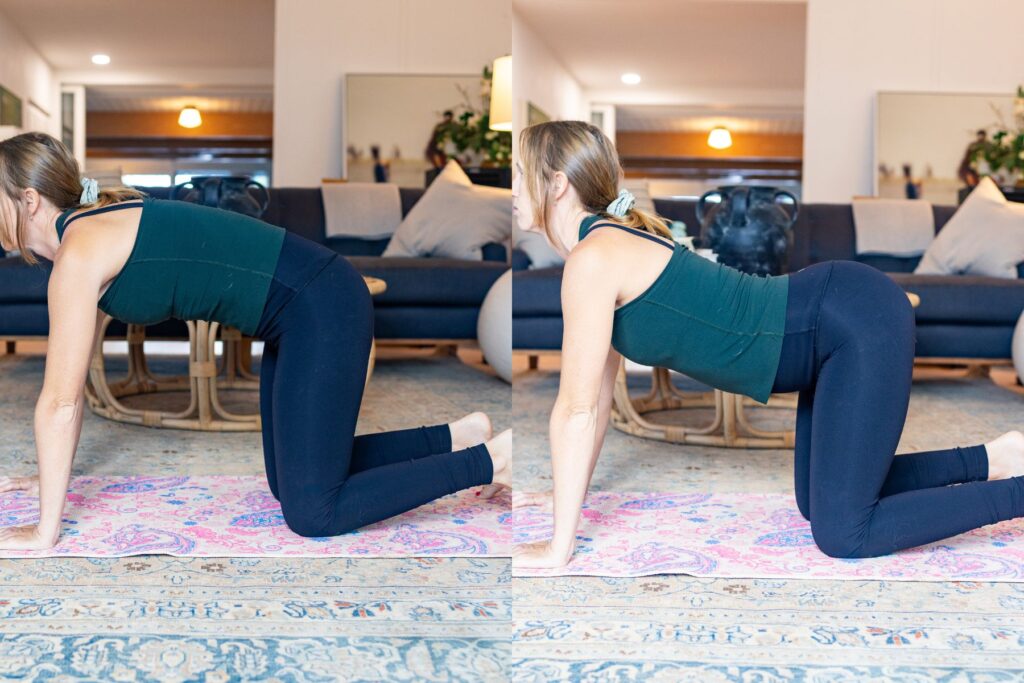
2. Tuck and Untuck Pelvic Movements/ Pelvic Rocking on hands and knees
It is best to do this exercise in the hands-and-knees position. Having the belly down allows gravity to help Baby settle into an optimal position.
To do this exercise:
- Keeping a neutral spine, focus on moving the pelvis into both the tucked and untucked positions.
- Do this 3 times a day for 40 repetitions.
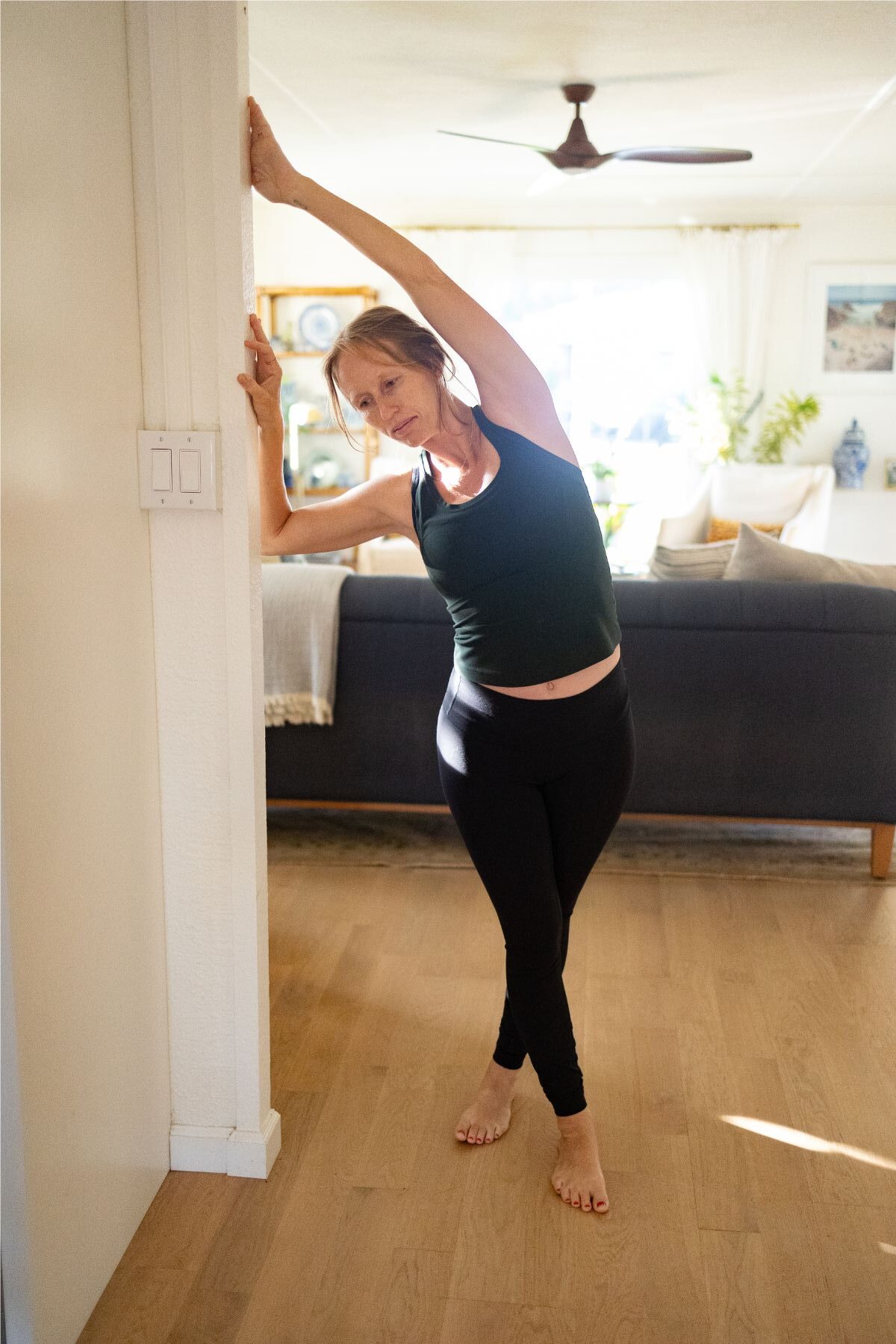
3. Quadratus Lumborum (QL) Stretch
The QL is another muscle that tends to become tighter and shortened, making it difficult for Baby to move into the inlet of the pelvis in the first stage of labor.
You can stretch this muscle by doing a standing lateral stretch:
- To stretch the right side, cross the left leg in front and lean your upper body to the left, reaching your arm overhead. Standing next to a wall can help with this stretch.
- You can also mimic this lying on the edge of a bed or couch.
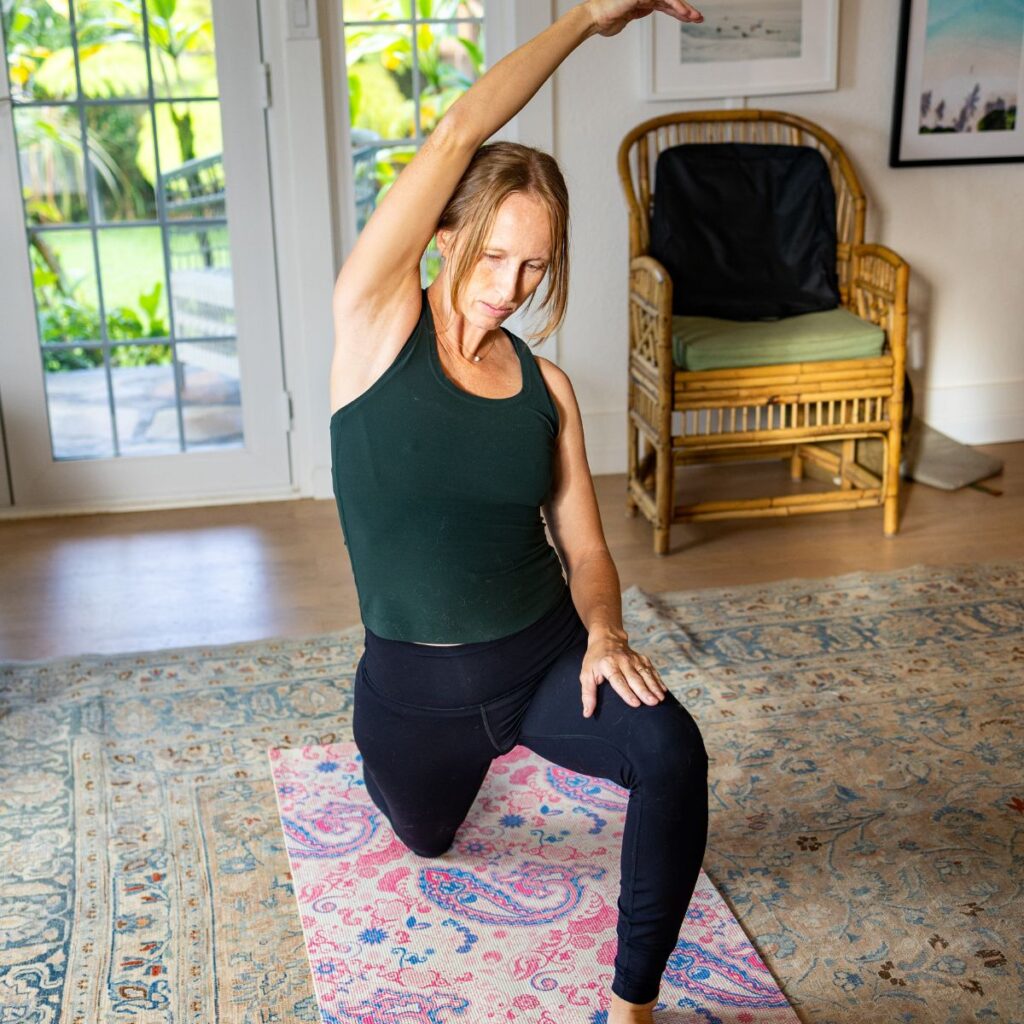
4. Tuck, Lunge, and Lean stretch
This move uses three positions to help move Baby into an optimal position. It stretches the hip flexors, stretches the QL, and helps tuck the pelvis under to create space in the inlet.
To do this:
- Get into a kneeling position with the right leg in front.
- Tuck the pelvis.
- Shift the body forward (keeping the upper body upright) to feel a stretch in the front of the left hip.
- Then, lean your upper body toward the right, raising the arm up overhead, keeping the shoulders square and the chest facing forward. Hold for 30 seconds to 1 minutes, breathing into the ribcage.
- Repeat on the other side.
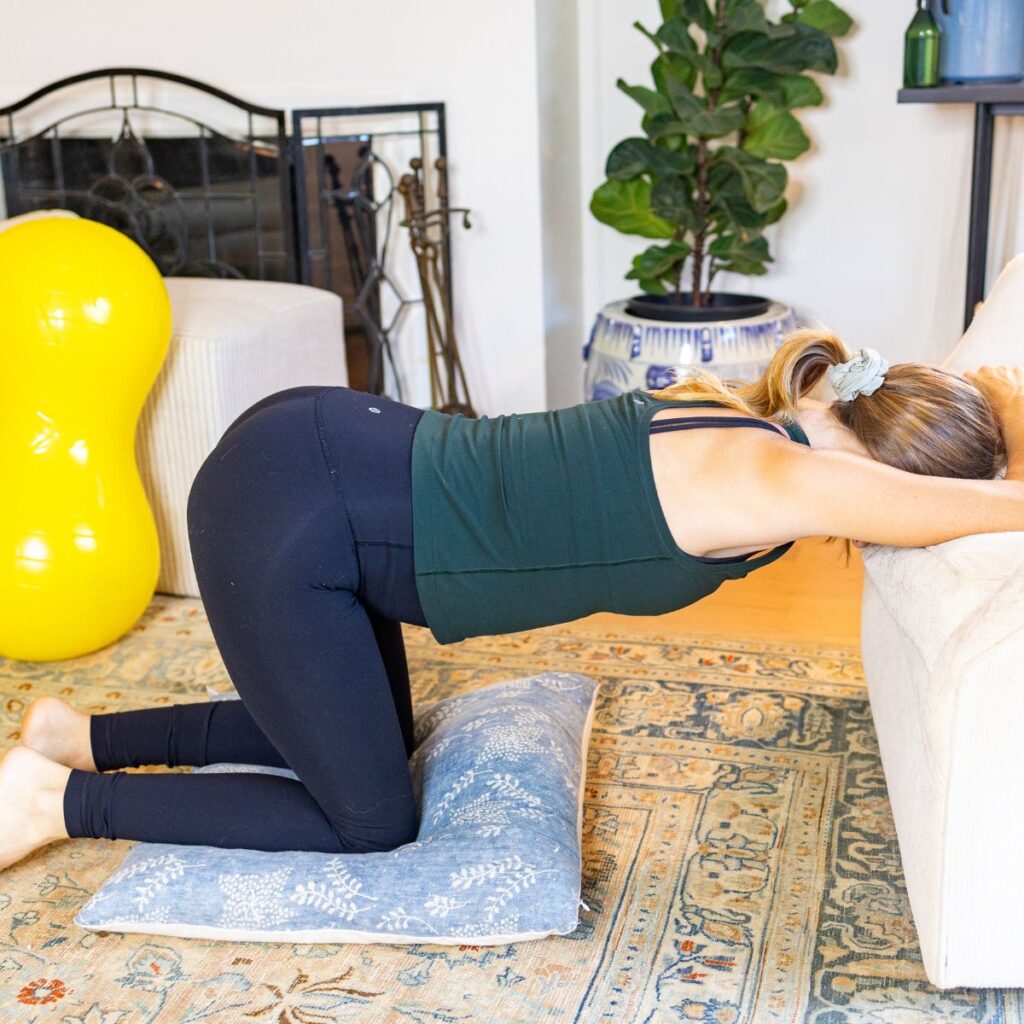
5. Elbows on chair stretch
Kneel on the ground and place your elbows onto a sturdy surface, such as a chair or bench. Allow your body to drop to feel a stretch in the front of your chest and lengthen into your spine. Maintain a neutral spine and pelvis during this stretch. Hold for 30 seconds to 1 minute.
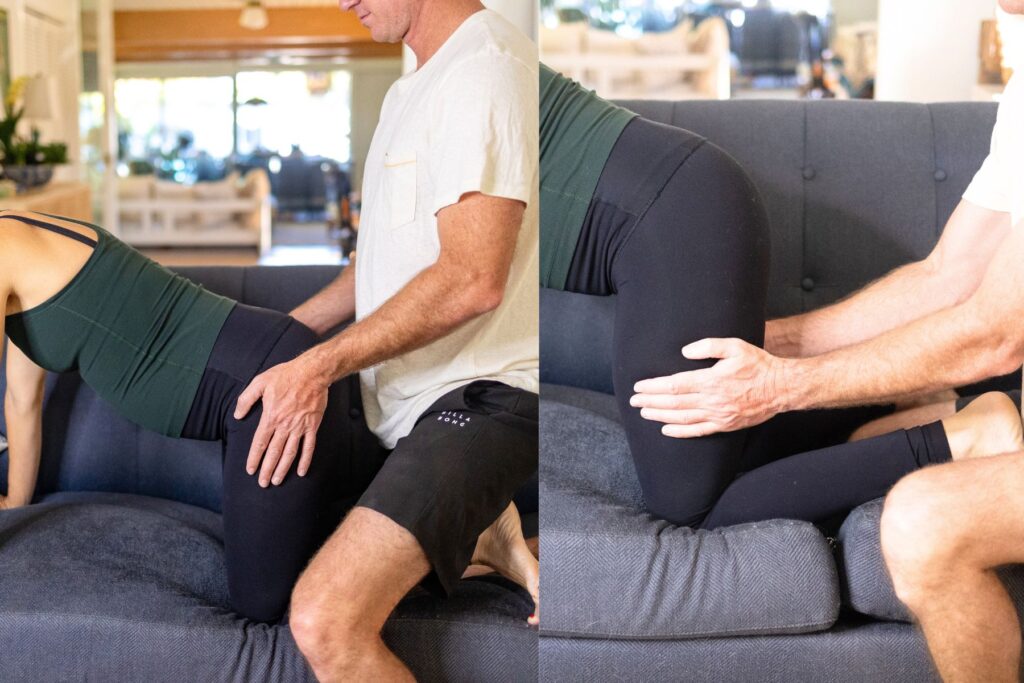
6. Fascial Mobilization/Jiggling
Fascia is a layer of connective tissue that surrounds and connects everything in the body. Releasing the pelvic fascia can help to optimize pelvic alignment and reduce pain and discomfort in the pelvic floor and ligaments.
To try this technique, get into a hands-and-knees position while your partner gently jiggles your glutes and thighs. The movement should be light and rhythmic, aiming to release tension in the superficial fascial layer. Your partner can place both hands on the outer sides of your hips or use one hand on the inner thigh and the other on the outer thigh. Continue for as long as it feels comfortable and soothing.
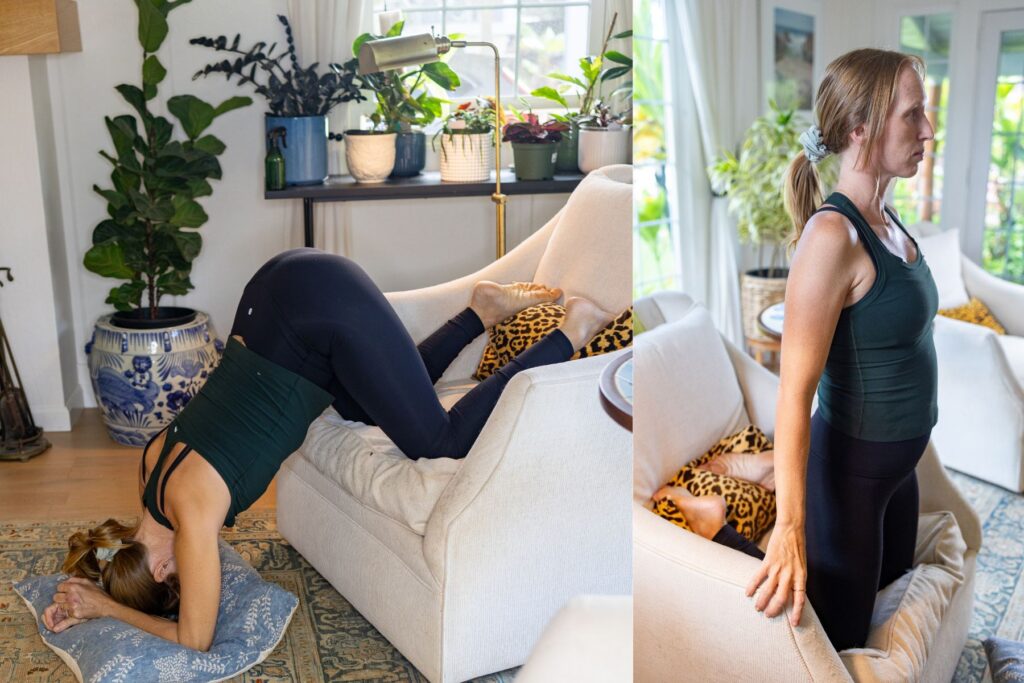
7. Forward Leaning Inversion
This technique aims to untwist and lengthen the ligaments surrounding the uterus and restore symmetry in the pelvis. It was established by Dr. Carol Phillips, a cranio-sacral therapist, and is now used in many body balancing protocols for pregnancy and labor.
To do: kneel on the edge of the sofa or chair and slowly lower the hands to the floor until you can move to the forearms. Slightly tuck the pelvis, but relax as much as you can. Stay in this position for 30 seconds while taking deep, slow, relaxing breaths. Then move up into the kneeling position and stay for another 30 seconds. You can do this once a day or more if you have a breech baby after 30 weeks.
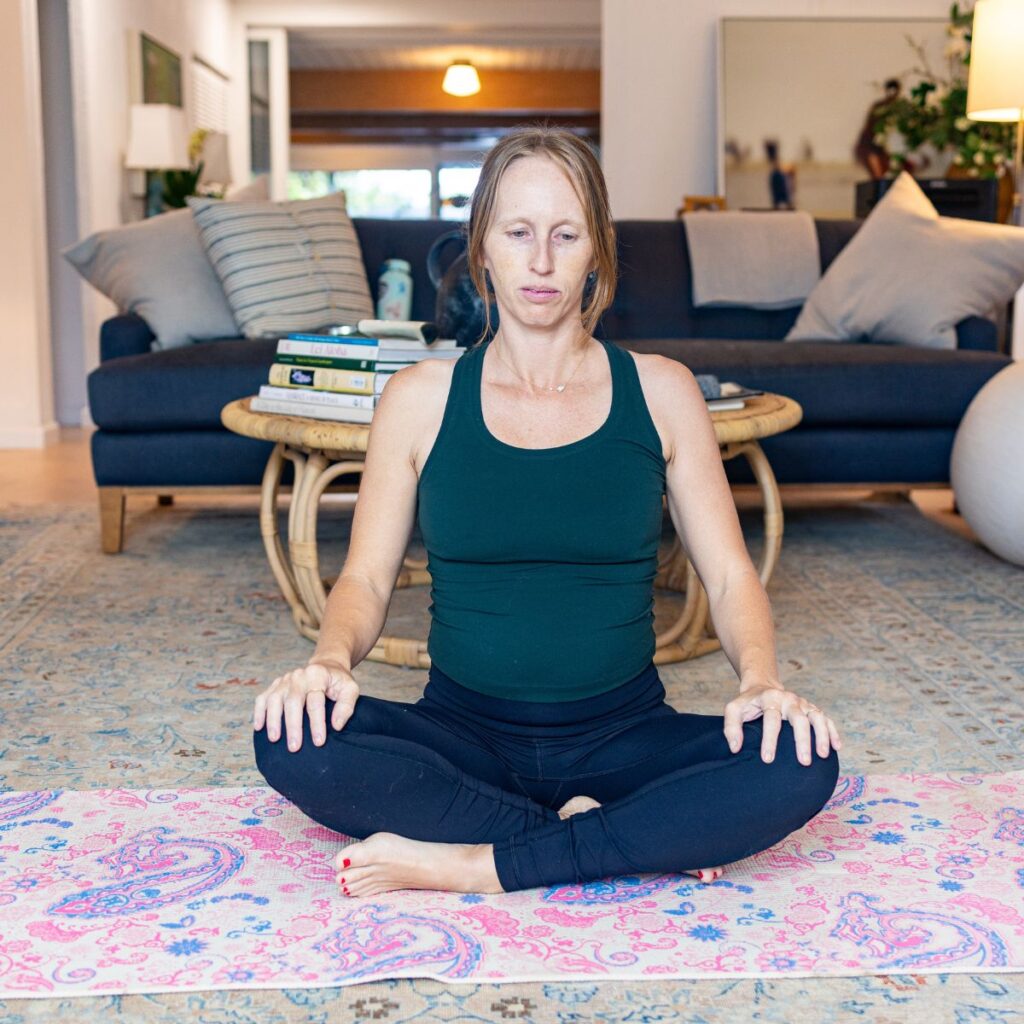
8. Tailor Sitting
This technique aims to untwist and lengthen the ligaments surrounding the uterus and restore symmetry in the pelvis. It was established by Dr. Carol Phillips, a cranio-sacral therapist, and is now used in many body balancing protocols for pregnancy and labor.
To do: kneel on the edge of the sofa or chair and slowly lower the hands to the floor until you can move to the forearms. Slightly tuck the pelvis, but relax as much as you can. Stay in this position for 30 seconds while taking deep, slow, relaxing breaths. Then move up into the kneeling position and stay for another 30 seconds. You can do this once a day or more if you have a breech baby after 30 weeks.
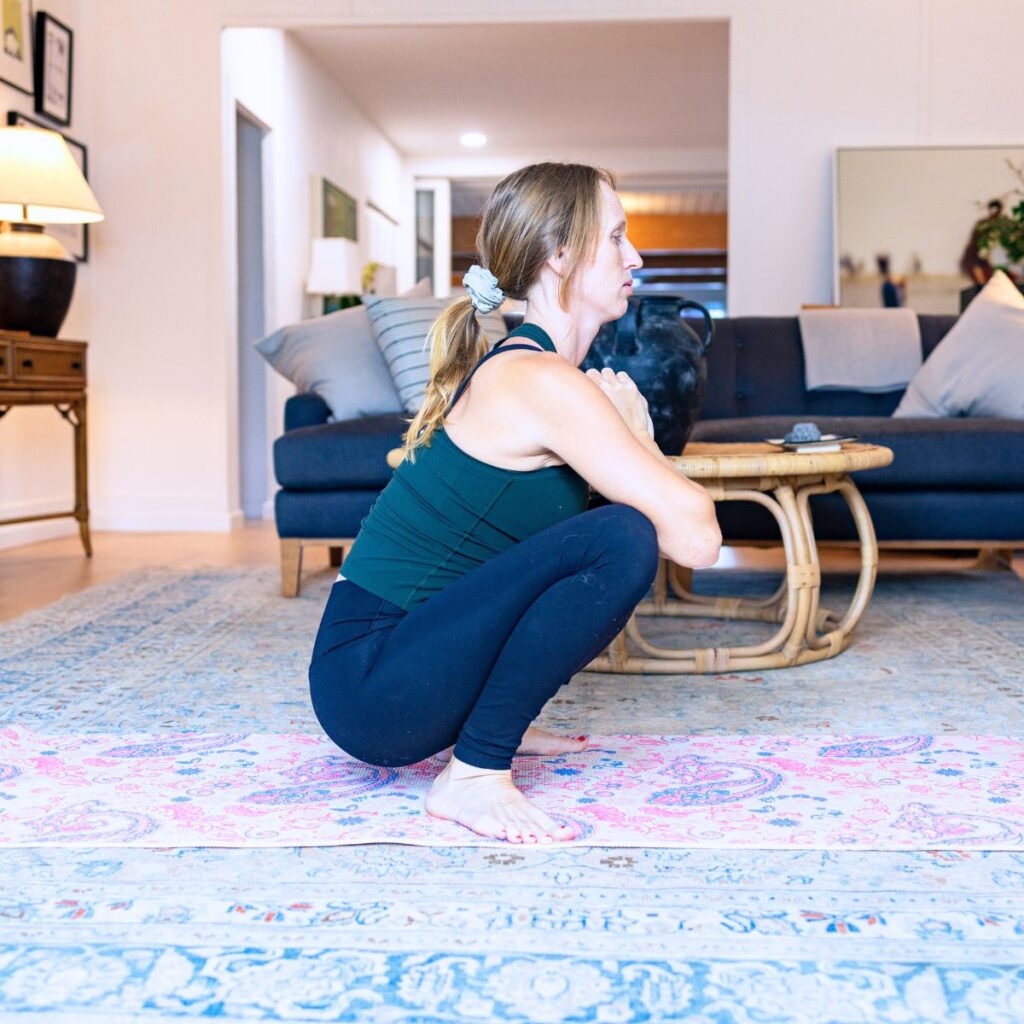
9. Deep Squatting
Spending time in the deep squatting position and squatting throughout the day as much as possible is beneficial for helping Baby move through the pelvis and getting the body ready for this pushing position in labor. Look for opportunities to squat throughout the day and spend time in the deep squat position. This position also promotes good flexibility in the muscles surrounding the pelvis.
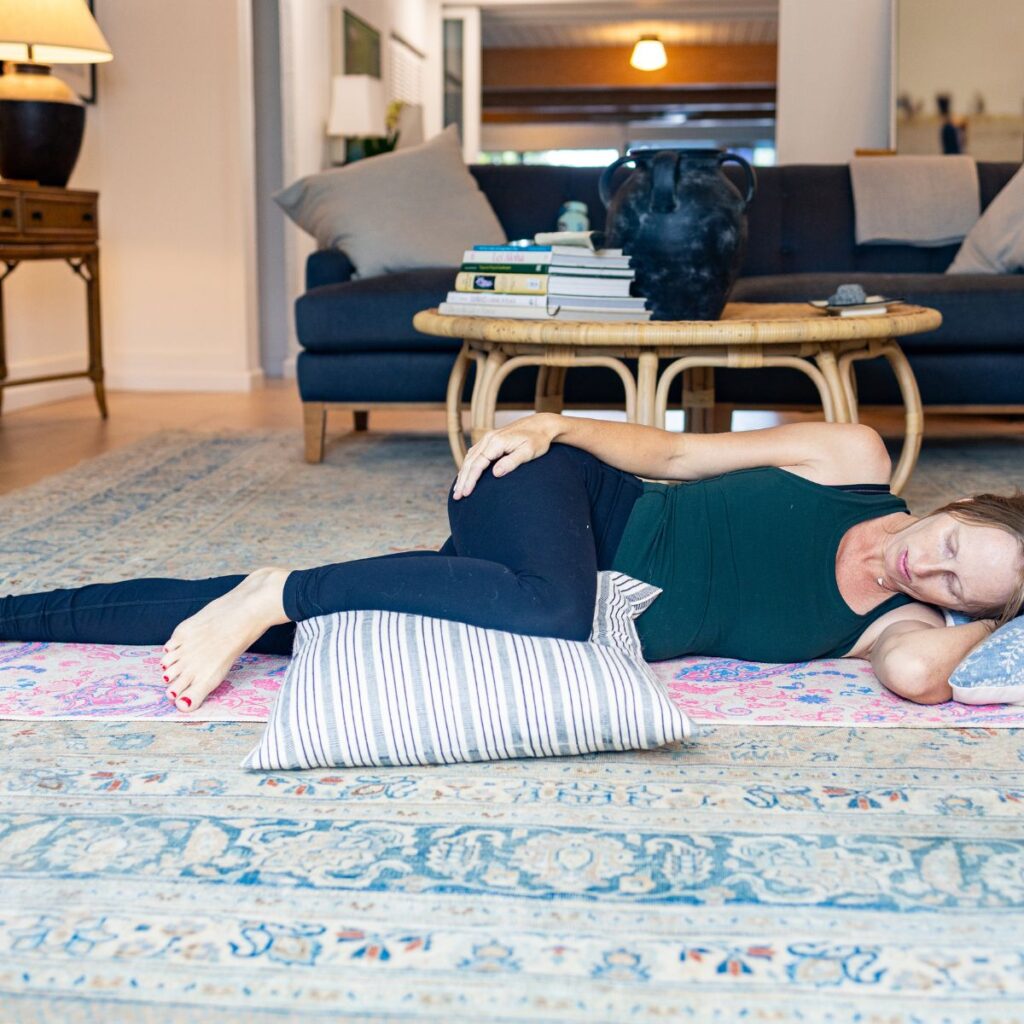
10. Exaggerated Side-Lying (Runner’s pose)
This is a great position to rest or sleep in, which helps Mama encourage baby into the LOT position. It is best to do this on the left side as much as possible.
Other Mindful Movements to get baby head down
1. Miles Circuit
The Miles Circuit routine, named after nurse and doula, Megan Miles, is.a series of three maternal positioning techniques designed to encourage optimal position of the baby, which can help initiate labor, get baby in an optimal position, and support a more comfortable, efficient birth. It is specifically important in the weeks leading up to labor, and ideally could be performed daily after 37 weeks gestation.
The three positions are:
- Forward-leaning inversion.
- Exaggerated side-lying.
- Asymmetrical movement (kneeling lunge with one leg out to the side or curb walking for example).
When to Do It
- Late third trimester- After 37 weeks this circuit can be done daily to help get baby in the best position to initiate labor.
- During early labor- This circuit can be useful in early labor to keep baby moving down and engage in the pelvis to dilate the cervix.
- If labor stalls.
2. Living in Good Body Alignment
Everyday body alignment can affect Baby’s position in the womb. Because posture and body positioning can influence pelvic balance and uterine space, certain everyday positions may make it harder for Baby to settle into an optimal head-down position. Becoming aware of how you sit, rest, and move throughout pregnancy can help support better alignment and encourage favorable fetal positioning. The following suggestions highlight positions that may be helpful to limit or modify, especially in the later weeks of pregnancy:
Slumped or Slouched-Sitting
When you are sitting and getting some time off your feet, try to avoid sitting in a slouched sitting position. This position puts the pelvis into a posterior tilt, with the belly up, and encourages Baby to rest in the face up position (OP position). When you are sitting, try to sit in a more upright position. Tailor sitting on the floor (or on another surface) can encourage a more upright posture in the upper back, and swapping your regular chair with an exercise ball can do the same.
Standing With Anterior Pelvic Tilt
As your uterus grows during pregnancy, it naturally pulls your body forward and can tilt the pelvis into an anterior position. This forward tilt reduces space in the pelvic inlet, making it harder for Baby to settle into the ideal position. Aim to stand with a neutral pelvis throughout your pregnancy to maintain optimal alignment. To check your pelvic position, place your fingers on the two prominent bones at the front of your hips, then trace a diagonal line down to your pubic bone (just above the vaginal area). These three points should line up on the same plane when your pelvis is neutral.
Crossing Your Legs
Crossing the legs can contribute to tightness in the adductor muscles, the muscles along the inner thighs, which may limit pelvic openness and make it harder for Baby to settle into an optimal position as labor approaches. Of course, sitting this way is fine in moderation.
The Bottom Line on how to get baby head down
Incorporating specific exercises and mindful movement and postures throughout your pregnancy can encourage your baby into an optimal position for labor. Movements that promote pelvic mobility, alignment, and flexibility, like daily walks, pelvic tilts, stretching, and sitting in supportive positions, help create space in the womb and encourage Baby to settle into the most favorable position for birth. While it’s not always possible to control exactly how Baby will position themselves, staying active and intentional with your movement can support your baby’s optimal positioning and contribute to a smoother labor and delivery experience.
If this all feels a bit overwhelming, remember—perfection isn’t the goal. There will be moments in your pregnancy when fatigue or nausea makes it hard to keep up with everything, and that’s completely okay. Just focus on being as mindful of your posture as you can when you can. Even small, consistent daily efforts can make a meaningful difference over the course of pregnancy.