
10 ways to help your newborn sleep at night
Gentle ways to build great Newborn sleep habits in months 1 and 2

The gift of sleep for your newborn baby
As a mama of three and a women’s health physical therapist, I feel like sleep is something that is overlooked as part of postpartum recovery. Sleep is so essential, both for you and your baby.
I am so grateful for the resources that taught me how to gently help my babies sleep well and create peaceful rhythms in our home. It has been a gift to my husband and me, allowing us reliable pockets of intentional time together in the evenings and naptimes while our babies rest.
Great sleep has also helped fill our days with joyful wake times for all three of my babies. This third time around, I started implementing these simple strategies almost right away, beginning at 2 weeks old. My baby started sleeping an 8-9-hour stretch at night by 8 weeks old. She is now 7 months old and sleeps from 6:30 PM to 6 AM on most nights.
Understanding Newborn sleep
8 hours of sleep by 8 weeks old
Did you know your newborn is capable of sleeping an 8-9 hour stretch of sleep by 8 weeks old?

Sleep is a gift
Sleep is one of the greatest gifts you can give your baby. When you give your newborn the tools to sleep at night and take great naps, you will increase her ability to learn about the world around her during wake times.
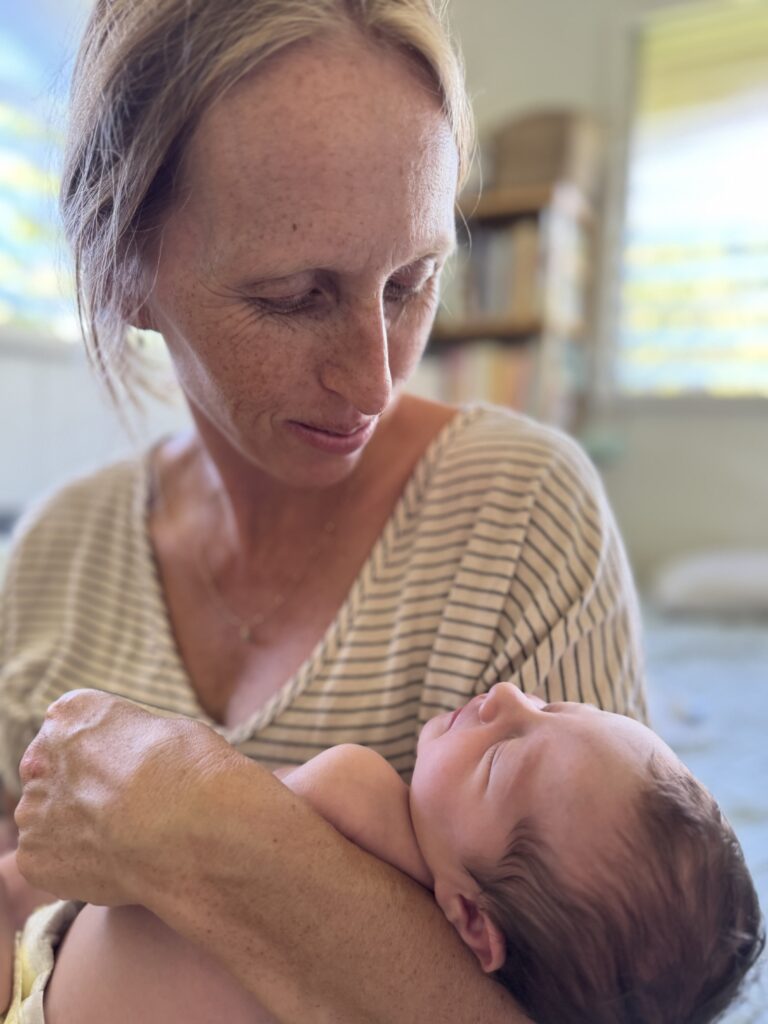
Gentle ways to build restful nights
There are gentle ways you can help your newborn baby sleep at night, even in the first two months of age. This doens’t mean you can’t cuddle your baby. There are only a few strategies to laying a solid foundation.

Helpful Concepts to help your newborn sleep at night
Weeks 1-2:
- Distinguish Day from Night
- During the day: keep things bright, open the blinds, and let normal household noise happen.
- At night: keep lights low and interactions calm and quiet during feedings and diaper changes.
- Feed Baby every 2-3 hours around the clock.
- Newborns are sleepy. There may be times when you need to gently wake Baby to ensure they receive enough calories in a 24-hour period.
- Don’t let daytime naps go too long.
- During the day, aim to keep each nap to no more than 2 hours so Baby can take in enough calories and eventually shift to longer nighttime sleep.
- Disassociate eating and sleeping when you can.
- Try to prevent Baby from falling asleep while eating when you can, and have a bit of wake time between a feeding and a nap
- It can be helpful to undress Baby or change her diaper in the middle of a feeding to help keep her awake.
Week 3
Around 3 weeks of age, you will notice that your baby is beginning to wake up a bit more to her surroundings. For week three, continue laying this great sleep foundation by focusing on the 4 tips above, but prepare to implement a few of the following strategies around week 4.
weeks 4-8:
- A Consistent Wake-Up Time.
- Starting the day around the same time helps regulate Baby’s internal clock.
- For many babies, 7–8 AM works well, but anything after 6 AM is developmentally appropriate.
- Because newborns are such good sleepers, you may need to gently wake Baby by 8 AM to start the day, or at your desired wake time. (I recommend a 7 AM wake time).
- Feed-Wake-Sleep Rhythm.
- Start the day by waiting a few minutes before a feeding if possible. This could even be as simple as changing the diaper.
- Offer a feeding, then age-appropriate awake time, then a nap.
- Repeat this sequence every 2.5–3 hours during the day as hunger and sleepiness begin to sync. Being mindful of wake windows can prevent an overtired baby.
- Focus On Full Feedings:
- Try to avoid constant “snacking” throughout the day if possible.
- Encourage fuller feeds spaced out every 2.5–3 hours during the day and try to avoid another small feeding right before sleep as a “top-off.”
- Cluster feeding (feeding every hour) in the evening before bedtime is normal in these early weeks of life.
- Keep in mind that hunger cues and sleepy cues can be similar at this stage, so even though Baby may appear to be hungry again, it could just be that she’s ready for sleep.
- Lay Baby Down Awake.
- When possible, lay Baby down when she’s calm and sleepy, but still awake. This will help her practice falling asleep independently.
- Aim to lay Baby down awake for at least one nap a day and at bedtime in the crib or bassinet. Other naps can occur on the go or as desired.
- Consistent Bedtime Routine.
- Most newborns do well with a bedtime between 7 and 8 PM.
- Create a routine that works for you.
- A simple routine may look like: bath, pajamas, song, clean diaper, swaddle, sound machine, lights off, and put in crib awake.
- Any routine you choose is perfect and will begin cuing Baby that it’s time for sleep.
- Keep Wake Windows in Mind.
- Your baby’s awake time slowly lengthens every week after birth.
- Knowing the developmentally appropriate wake window for your baby’s age can help you offer a nap or initiate bedtime before your little one becomes overtired.
- Being mindful of wake windows can help you maintain a gentle eat–wake–sleep rhythm throughout the day, rather than offering a feeding at every whimper, while still always responding to true hunger cues and feeding on demand.
- This balance supports both good nourishment and more restful sleep.
Other Helpful Newborn Sleep Tips
Other helpful Newborn sleep tips:
1. Be aware of SLEEPY cues vs OVERTIRED cues:
Sleepy Cues
- Red eyebrows
- Rooting
- Slightly fussy
- Hands to mouth
- Sucking
- Staring
- yawning
Overtired Cues
- Pushing away
- Unable to soothe
- Difficulty falling asleep
2. Guidance on sleep props
- Helpful Sleep Props:
- White noise
- Swaddling or sleep sack
- Calm, predictable routine
- Pacifier
- Use With Caution:
- Feeding to sleep
- Rocking to sleep for every nap and at bedtime
- Using car rides, swings, or vibrating devices as the main way to get Baby to sleep
These sleep tools aren’t “bad,” but relying on them exclusively can make independent sleep harder later.
3. Soothing Tools: The 6 S’s
From the moment of birth, you can use the 6 S’s to help soothe a crying or fussy baby. The goal is to mimic the feeling of being in the womb as much as possible by recreating the feelings and sounds Baby has been familiar with over the past 9-10 months in the womb.
- Here’s how:
- Swaddle– This helps Baby feel snug like she felt in the womb.
- Side-lying Hold– turning Baby away from you decreases the stimulating input from Mama’s face.
- Sway (or subtle movement)- Baby is used to feeling you move throughout the day, so a little movement is comforting.
- Shoosh or use a sound machine– Baby was hearing the sound of Mama’s blood pumping all day, every day in the womb, which acted as a constant “white noise.”
- Suck– Offer a pacifier or finger to suck on
- Stay Calm– Babies can sense when Mama feels anxious.
Once Baby is soothed, she can be laid down awake in the crib. This technique can also be used to calm a fussy baby during their wake time.
Grab a copy of my Sleep Guides Here:
-

Baby Sleep Guide 3 & 4 Months
$0.00 -

Newborn Sleep Guide
$0.00
For more information on newborn sleep tips

She has written these Baby Sleep Guides to help other mamas create healthy rhythms and recover well, while giving Baby the sweet gift of sleep.