Mastering the Dream Feed: When and How to Help Your Baby Sleep Longer
If your baby is leaving the newborn stage and entering the infant stage, you will likely begin to notice some changes in her sleep patterns and needs. Maybe up until this point, your baby has had a nice long stretch of sleep at night without any problems. That is wonderful!
Sometimes, babies can begin waking up a bit more around months 3 and 4, often known as the four-month sleep regression. If you read my post on the four-month sleep regression, you would recall that it’s actually not a regression, but a progression of sleep. Babies are developing daily right before our eyes, and with that come almost daily changes in their sleep patterns and needs.
With that, you may be wondering how to help your baby continue to be a good little sleeper all throughout infancy and into toddlerhood. One specific way you can help your baby continue to get a longer stretch of sleep at night is by offering a dream feed.
What is a dream feed?
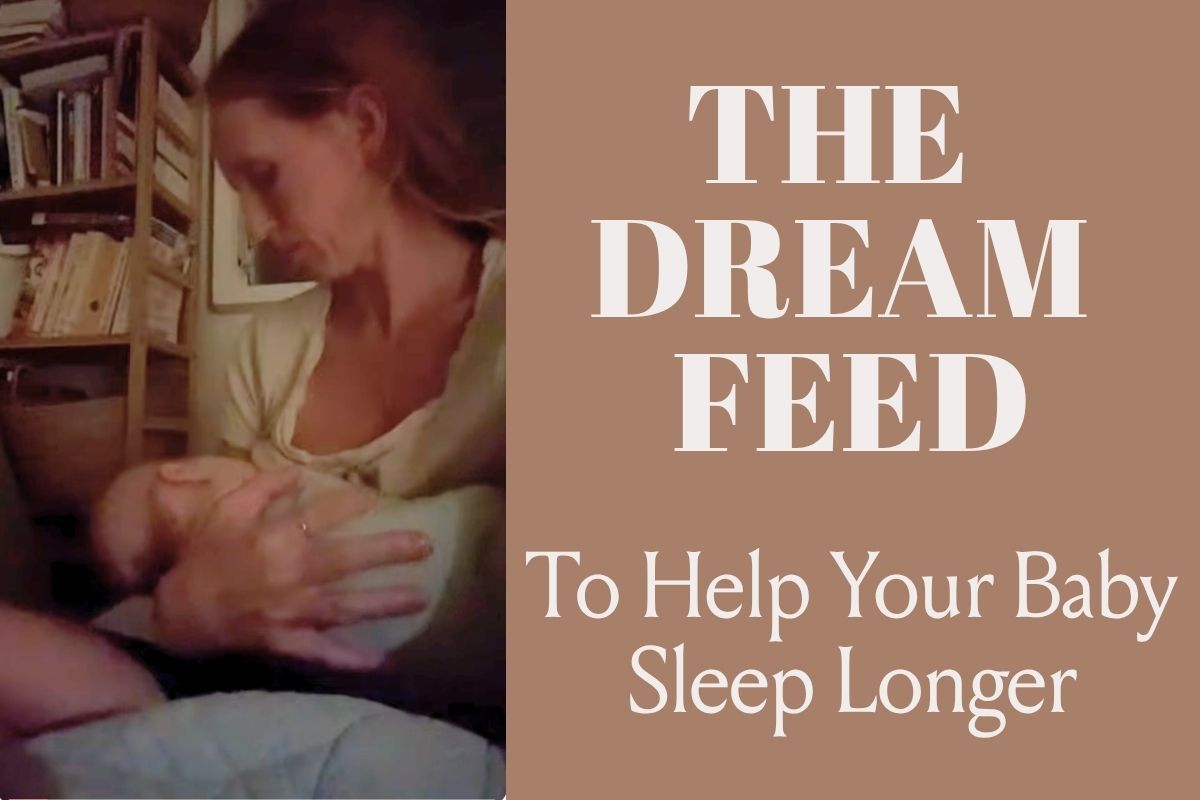
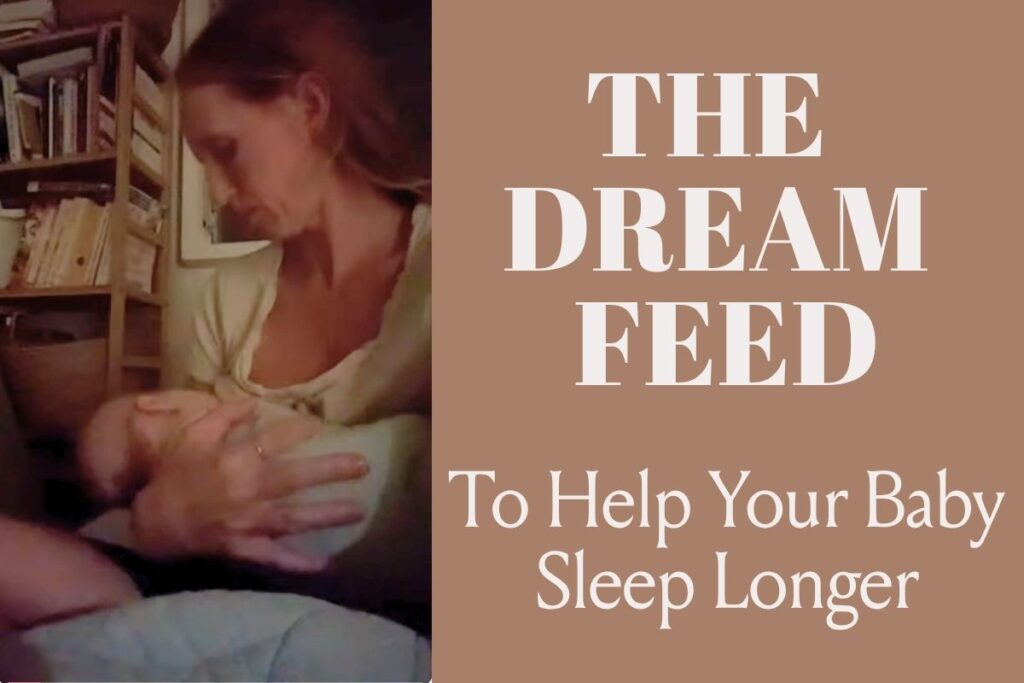
A dream feed is a feeding you offer your baby while they are still mostly asleep, typically between 9:30–11:30 PM, before you go to bed yourself.
Instead of waiting for your baby to wake up hungry in the middle of the night, you gently feed them before that wake-up happens.
The goal?
To “top them off” so they can sleep a longer stretch overnight.
when to begin offering a dream feed
Dream feeds tend to work best in the early months, especially:
- Beginning around 4–5 months.
- When your baby is already giving you at least one longer stretch of sleep.
- If your baby tends to wake up predictably (ex: always at 1:00 AM).
It can be especially helpful if:
- You’re heading to bed and want to avoid an immediate wake-up.
- Your baby just needs a little extra intake to make it through the night.
However, if your baby is already sleeping long stretches (5–8+ hours), a dream feed may not be necessary—and in some cases, it can actually disrupt their natural rhythm. I have found this to be the case with babies who are younger than three months old. Babies in the newborn phase can naturally get a long stretch of sleep at night without the dream feed.
As babies approach three and four months of age, they begin to have sleep cycles more similar to adults, where they are in lighter stages of sleep more consistently. This can cause easier wakings. A dream feed could be helpful to help your baby connect night time sleep cycles and get a longer stretch of sleep to sync with Mama’s sleep.
How to do a dream feed
The key to a successful dream feed is keeping your baby as sleepy as possible.
Here’s how:
- Keep the lights low or off
- Avoid diaper changes unless absolutely needed
- Gently pick your baby up and offer a feed
- Let them latch or take the bottle without fully waking
- Keep interaction minimal (no talking, no stimulation)
- Place them back down once finished
Some babies will feed easily in this state, while others may resist or wake fully. Both are normal—and part of figuring out if it works for your baby.
Signs the dream feed is working
You’ll know it’s helping if:
- Your baby sleeps a longer first stretch
- That usual middle-of-the-night wake-up is delayed or eliminated
- Your baby settles back down easily after the feed
In this case, the dream feed is doing exactly what it’s meant to do—supporting longer, more consolidated sleep.
Signs it may not be worth it
Not every baby benefits from a dream feed.
You may want to skip it if:
- Your baby wakes fully and struggles to go back down
- It doesn’t extend sleep at all
- It creates more night wakings instead of fewer
- It feels stressful or disruptive for you
Sleep is never about forcing a strategy—it’s about finding what works best for your baby and your family.
A balanced approach to longer sleep
The dream feed can be a helpful tool—but it’s just that: a tool.
It works best when it fits into a bigger picture of healthy sleep habits, including:
- Full feeds during the day
- Age-appropriate wake windows
- A consistent bedtime routine
When those pieces are in place, the dream feed can gently support longer stretches—without becoming something your baby depends on long term.